Nearby Megalithic Sites
You know how sometimes you hear about places like Stonehenge and think, ‘Wow, that’s old!’? Well, it turns out there are a ton of other megalithic sites all over the world, and some of them are even older or bigger. It’s pretty wild to think about how people built these massive stone structures so long ago, without all the tools we have today. This article is going to take a look at some of these amazing ancient spots, from huge stone circles to strange earth mounds, showing just how much cool stuff is out there beyond the famous ones.
Key Takeaways
- Ancient megaliths are found globally, not just in famous spots like Stonehenge.
- Many of these old stone places are much older than you might think, some dating back thousands of years.
- The U.S. has its own cool megalithic sites, showing a rich history of ancient building.
- Some megalithic structures were built to line up with the sun or stars, which is pretty neat.
- There are lots of different kinds of these stone structures, each with its own story and purpose.
Ancient Megaliths Around the World
It’s easy to think Stonehenge is the be-all and end-all of ancient megaliths, but the world is full of these fascinating structures. Many predate Stonehenge by thousands of years, and some are far larger. Let’s take a look at a few notable examples.
Göbekli Tepe in Turkey
Located in southeastern Turkey, Göbekli Tepe is a game-changer. This site dates back over 11,000 years, making it twice as old as Stonehenge. Imagine that! It was built by hunter-gatherers, which challenges the idea that complex religious structures came after settled agriculture. The site consists of several enclosures with massive T-shaped pillars, many decorated with animal carvings. It’s a truly incredible place that makes you rethink early human history. You can learn more about the Mesopotamia region where it’s located.
Avebury Stone Circle in England
While Stonehenge gets all the attention, Avebury is actually the largest stone circle in Britain. It encompasses a whole village! The outer circle is massive, and there are two smaller stone circles inside. Walking around Avebury, you really get a sense of the scale and ambition of the people who built it. It’s less manicured than Stonehenge, which gives it a wilder, more mysterious feel. It’s a great example of ancient people and their ingenuity.
Dolmen of Guadalperal in Spain
Also known as the "Spanish Stonehenge," the Dolmen of Guadalperal is a fascinating megalithic monument that’s usually submerged in the Valdecañas reservoir. During droughts, the water level drops, revealing the stones. The dolmen dates back to the 3rd millennium BCE and consists of about a hundred standing stones. Its purpose is still debated, but it was likely a burial site or a ceremonial space. The fact that it’s usually underwater adds to its mystique. It’s a reminder of how much history can be hidden, waiting to be rediscovered. It’s a great example of archaeology and how much we can learn from it.
These ancient sites offer a glimpse into the minds of our ancestors. They show us that people thousands of years ago were capable of incredible feats of engineering and had complex spiritual beliefs. Exploring these megaliths is like stepping back in time and connecting with the deep past.
Here’s a quick comparison of the sites:
| Site | Location | Approximate Age | Notable Feature |
|---|---|---|---|
| Göbekli Tepe | Turkey | 11,000 years | Oldest known megalithic site |
| Avebury Stone Circle | England | 4,500 years | Largest stone circle in Britain |
| Dolmen of Guadalperal | Spain | 5,000 years | Usually submerged, revealed during droughts |
These sites are just a few examples of the many ancient megaliths around the world. They are testaments to human ingenuity and our enduring fascination with the past. There are many megaliths around the world to explore.
Notable Megalithic Sites in the United States
While Europe often comes to mind when thinking about megaliths, the United States has its own share of fascinating ancient sites. These locations, built by various cultures over thousands of years, offer a glimpse into the lives and beliefs of early Americans. Let’s explore some of the most notable examples.
America’s Stonehenge in New Hampshire
Often shrouded in mystery, America’s Stonehenge ancient history in Salem, New Hampshire, is a complex of stone walls, chambers, and standing stones. Its origins are debated, with some believing it to be the work of pre-Columbian Europeans, while others attribute it to early Native American cultures. Regardless of its exact history, the site exhibits astronomical alignments, suggesting it was used as an observatory or ceremonial center. It’s a pretty cool place to visit, even if the history is a bit murky. You can wander around the stones and try to imagine what life was like for the people who built it.
Bighorn Medicine Wheel
Located in the Bighorn Mountains of Wyoming, the Bighorn Medicine Wheel is a stone circle with radiating spokes. It’s a sacred site for several Native American tribes, who have used it for centuries for ceremonies and vision quests. The wheel’s layout aligns with the summer solstice sunrise and certain stars, indicating its astronomical significance. It’s a powerful place, and you can feel the history and spirituality when you’re there. The views from the mountains are incredible, too.
Cahokia Woodhenge in Illinois
Cahokia, near present-day Collinsville, Illinois, was the largest pre-Columbian city north of Mexico. The Cahokia Woodhenge was a series of timber circles used for astronomical observations. These circles helped the Cahokia people track the seasons and plan their agricultural activities. It’s amazing to think about how advanced these people were, and how they used their knowledge of the stars to build such a complex society. The site is still being studied today, and new discoveries are constantly being made.
Visiting these sites can be a really moving experience. It’s a chance to connect with the past and learn about the people who came before us. It’s also a reminder that history isn’t just something you read about in books; it’s something that’s all around us, waiting to be discovered.
Megalithic Structures in the British Isles
The British Isles are home to a wealth of megalithic sites, each with its own unique history and purpose. From standing stones to burial chambers, these structures offer a glimpse into the lives and beliefs of the people who inhabited these islands thousands of years ago. It’s amazing to think about the effort it took to move and erect these massive stones without modern technology. Let’s explore some of the most notable examples.
Callanish Stones in Scotland
The Callanish Stones, located on the Isle of Lewis in Scotland, are a striking example of a stone circle. The main circle consists of 13 standing stones, with a central monolith towering above the rest. The site’s purpose remains a mystery, but theories suggest it was used for astronomical observations or ritualistic practices. The remote location adds to the site’s mystique, making it a must-see for anyone interested in ancient history. It’s a bit of a drive, but totally worth it to see the ancient stone circle.
Maeshowe in Orkney
Maeshowe is a Neolithic chambered cairn and passage grave located on Mainland Orkney, Scotland. What makes Maeshowe particularly interesting is its alignment with the winter solstice. During this time, the setting sun shines directly down the entrance passage, illuminating the rear wall of the chamber. This alignment suggests a sophisticated understanding of astronomy and a deep connection to the cycles of nature. It’s also famous for the Viking graffiti left inside, providing a unique historical layer. The winter solstice alignment is a sight to behold, if you can get there at the right time.
Bryn Celli Ddu in Wales
Bryn Celli Ddu, meaning "the mound in the dark grove," is a prehistoric site located on the Isle of Anglesey in Wales. It’s a passage tomb, and excavations have revealed evidence of earlier structures on the site, suggesting it was a place of importance for thousands of years. The site is aligned with the summer solstice sunrise, with light illuminating a quartz stone at the back of the chamber. It’s a beautiful and atmospheric place, offering stunning views of the surrounding landscape. The luxury chauffeur services can take you there in style.
Visiting these sites, you can’t help but feel a connection to the past. The sheer scale of the structures, combined with the mystery surrounding their purpose, makes for a truly awe-inspiring experience. It’s a reminder that we are part of a long and complex history, and that there is still much to learn about the people who came before us.
Here’s a quick comparison of the sites:
| Site | Location | Type | Notable Feature |
|---|---|---|---|
| Callanish | Isle of Lewis | Stone Circle | Central monolith |
| Maeshowe | Mainland Orkney | Chambered Cairn | Winter solstice alignment |
| Bryn Celli Ddu | Isle of Anglesey | Passage Tomb | Summer solstice alignment, quartz stone illumination |
These sites are just a small sample of the megalithic wonders found in the British Isles. Exploring them offers a fascinating journey into the past, revealing the ingenuity and beliefs of our ancestors. Consider these points when planning a visit:
- Check opening times and accessibility before you go.
- Wear appropriate footwear, as the terrain can be uneven.
- Respect the sites and avoid climbing on the stones.
Other Significant Megalithic Locations
Beyond the well-trodden paths of Stonehenge and other famous sites, a wealth of megalithic locations dot the landscape, each holding unique stories and significance. These sites, while perhaps less known, offer fascinating insights into the ingenuity and beliefs of past civilizations. Let’s explore a few.
Emerald Mound and Village Site in Illinois
Located near Lebanon, Illinois, the Emerald Mound and Village Site is a significant Mississippian culture site. It’s not just one mound; it’s a complex of earthworks that once supported a thriving community. Archaeologists believe this site was occupied from around 1000 to 1300 AD. The main mound is one of the largest in North America, offering a glimpse into the social and ceremonial life of its inhabitants. It’s a reminder that megalithic structures aren’t always about standing stones; sometimes, they’re about massive earthworks.
Haleets on Bainbridge Island
Haleets, located on Bainbridge Island in Washington state, presents a different kind of megalithic mystery. These are not towering stones or massive mounds, but rather a collection of petroglyphs etched into the rocks. The meaning of these carvings remains a subject of debate, but their presence speaks to the long history of human activity in the area. The petroglyph interpretation is still debated by experts.
Serpent Mound in Ohio
The Serpent Mound in Ohio is an effigy mound, representing a snake with an open mouth. It’s one of the largest serpent effigies in the world, stretching over 1,300 feet. Its purpose is still debated, but many believe it had astronomical or ceremonial significance. The mound aligns with the summer solstice sunset, suggesting a connection to ancient celestial observations. It’s a powerful reminder of the diverse ways ancient cultures expressed their beliefs through earthworks.
Exploring these lesser-known megalithic sites offers a chance to connect with the past in a more intimate way. They remind us that the human story is vast and complex, with countless chapters yet to be fully understood. These sites, often overlooked in favor of their more famous counterparts, hold valuable clues to understanding the beliefs and practices of ancient peoples.
Here’s a quick comparison of the sites:
| Site | Location | Type | Notable Feature |
|---|---|---|---|
| Emerald Mound and Village Site | Lebanon, Illinois | Earthwork Complex | One of the largest mounds in North America |
| Haleets | Bainbridge Island, WA | Petroglyphs | Carvings of unknown meaning |
| Serpent Mound | Ohio | Effigy Mound | Aligns with the summer solstice sunset |
Megalithic Sites with Astronomical Alignments
Many ancient megalithic sites weren’t just impressive feats of engineering; they also served as sophisticated astronomical observatories. These sites demonstrate a deep understanding of celestial movements and their connection to earthly events. It’s pretty amazing to think about the knowledge these early people possessed.
Octagon Earthworks in Ohio
The Octagon Earthworks is part of the Hopewell Ceremonial Earthworks. It’s a huge complex of earthen walls that form an octagon attached to a circle. The cool thing is that these shapes align with specific lunar events. Researchers have found that the earthworks accurately mark the lunar standstill, which happens every 18.6 years. This shows that the Hopewell people had a long-term understanding of lunar cycles. It’s not just a random shape; it’s a carefully planned astronomical calendar. The Hopewell Ceremonial Earthworks are a testament to their astronomical knowledge.
Holly Solstice Panel in Hovenweep National Monument
Hovenweep is a collection of ancestral Puebloan villages located on the border between Colorado and Utah. One of the most interesting features is the Holly Solstice Panel. This panel is a set of petroglyphs (rock carvings) that mark the summer solstice. On the summer solstice, a beam of sunlight shines through a narrow opening and hits a specific spot on the panel. This would have been a way for the Puebloans to track the seasons and plan their agricultural activities. It’s a pretty ingenious way to use sunlight to mark time. It’s like a natural calendar carved into the rock. The summer solstice is a key event marked by this panel.
Moorehead Circle in Ohio
Located in Ohio, the Moorehead Circle is another example of Hopewell earthworks with possible astronomical significance. While the exact purpose is still debated, some researchers believe that the circle may have been aligned with specific solar events. The earthwork’s diameter and layout could have been used to track the sun’s movements throughout the year. It’s another piece of evidence that the Hopewell people were very interested in the sky and how it related to their lives. It’s a reminder that these ancient sites weren’t just for show; they had a practical purpose. The Moorehead Circle is a fascinating site for archaeoastronomy.
It’s important to remember that interpreting the astronomical alignments of these sites can be tricky. There’s often a lot of debate among researchers about the accuracy and significance of these alignments. It’s not always easy to know for sure what the original builders intended. However, the evidence suggests that many of these sites were designed with the sky in mind.
Here’s a quick summary of the sites:
- Octagon Earthworks: Aligned with lunar standstill.
- Holly Solstice Panel: Marks the summer solstice.
- Moorehead Circle: Possible solar alignments.
Diverse Megalithic Forms and Functions
Megalithic sites aren’t all the same. They come in a surprising variety of shapes and sizes, each likely serving a slightly different purpose or reflecting the unique cultural practices of its builders. It’s easy to think of Stonehenge when you hear "megalith," but that’s just scratching the surface. Let’s take a look at some of the diverse forms these ancient structures took.
Ring Cairns
Ring cairns are, well, rings of stones. They’re usually low, circular embankments made of piled stones, often with a hollow center. Their exact function is debated, but they’re generally believed to have been used for burial or ceremonial purposes. You find them all over the British Isles, and they’re a pretty common type of megalithic structure. It’s interesting to think about what kind of rituals might have taken place inside these stone circles.
Passage Graves
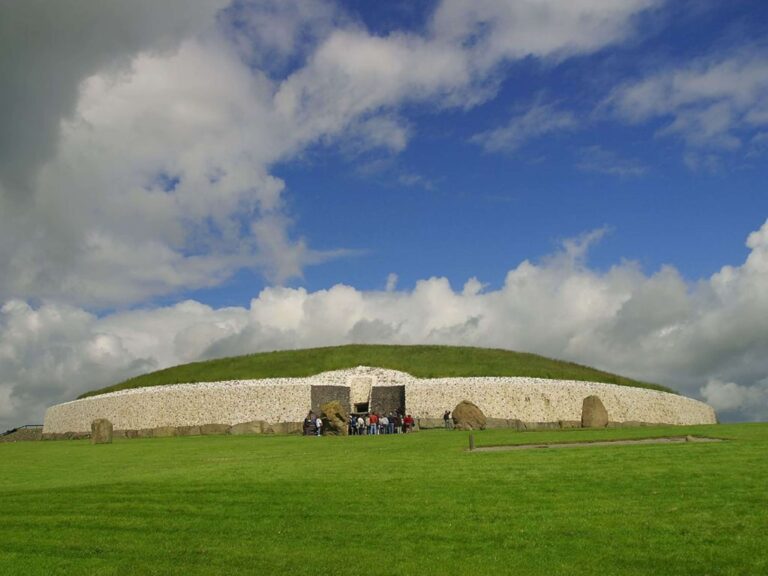
Passage graves are burial mounds with a narrow passage leading to a central chamber. These are much more elaborate than simple cairns. The passage and chamber are usually constructed of large stones, and the whole thing is covered with earth or smaller stones to form a mound. Think of it as a really old, really fancy tomb. The most famous example is probably Newgrange in Ireland, which is aligned with the winter solstice. These ancient megaliths are impressive feats of engineering, especially considering the tools available at the time.
Simple Dolmens
Simple dolmens are probably the most basic type of megalithic structure. They consist of a large flat stone (the capstone) supported by two or more upright stones. They’re often referred to as "portal tombs" because they look like a doorway. Over time, the earth covering them erodes, leaving just the stone structure exposed. They’re found all over the world, and they’re a testament to the ingenuity of early humans. It’s amazing how they managed to move and erect these massive stones with such limited technology.
Megalithic structures are a window into the past. They show us how people lived, what they believed, and what they valued. By studying these sites, we can learn a lot about the cultures that built them.
Here’s a quick comparison of the three types:
| Feature | Ring Cairns | Passage Graves | Simple Dolmens |
|---|---|---|---|
| Structure | Circular | Mound with passage | Capstone on uprights |
| Primary Function | Burial/Ceremonial | Burial | Burial |
| Complexity | Simple | Complex | Simple |
Giant stone structures, known as megaliths, come in all shapes and sizes, and they weren’t just for show. Some were tombs, others were places for ceremonies, and some even marked the stars. To learn more about these amazing ancient wonders and their many uses, visit our website today!
Conclusion
So, as you can see, there’s a whole world of these old stone places out there, not just the famous ones. Each spot has its own story, its own mysteries, and its own way of showing us what people were up to way back when. It’s pretty cool to think about how these structures have lasted so long, giving us a peek into the past. They really make you wonder about the folks who built them and what they were thinking. It just goes to show, history is everywhere, if you just take a moment to look.
Frequently Asked Questions
What are megalithic sites?
Megalithic sites are ancient places built with very large stones. These sites were created by people long ago, often for special purposes like burials, ceremonies, or watching the stars.
Is Stonehenge the oldest or biggest megalithic site?
No, Stonehenge is famous, but it’s not the oldest or largest. Göbekli Tepe in Turkey is much older, and Avebury in England has a bigger stone circle.
Where can you find megalithic sites?
Megalithic sites can be found all over the world, including Europe, Asia, Africa, and the Americas. Each region has its own unique types of stone structures.
What were these ancient stone structures used for?
Scientists believe these sites were used for many things, like burying important people, holding religious events, tracking the sun and moon, or marking territories. Their exact uses often remain a mystery.
Do all megalithic sites have connections to astronomy?
Many megalithic structures, like the Octagon Earthworks in Ohio or Bryn Celli Ddu in Wales, were built to line up with the sun or moon at specific times of the year, like the solstices.
Are there different kinds of megalithic structures?
Megalithic sites come in many shapes and sizes. Some are simple dolmens (like a stone table), others are passage graves (stone tunnels for burials), and some are ring cairns (circles of stones).